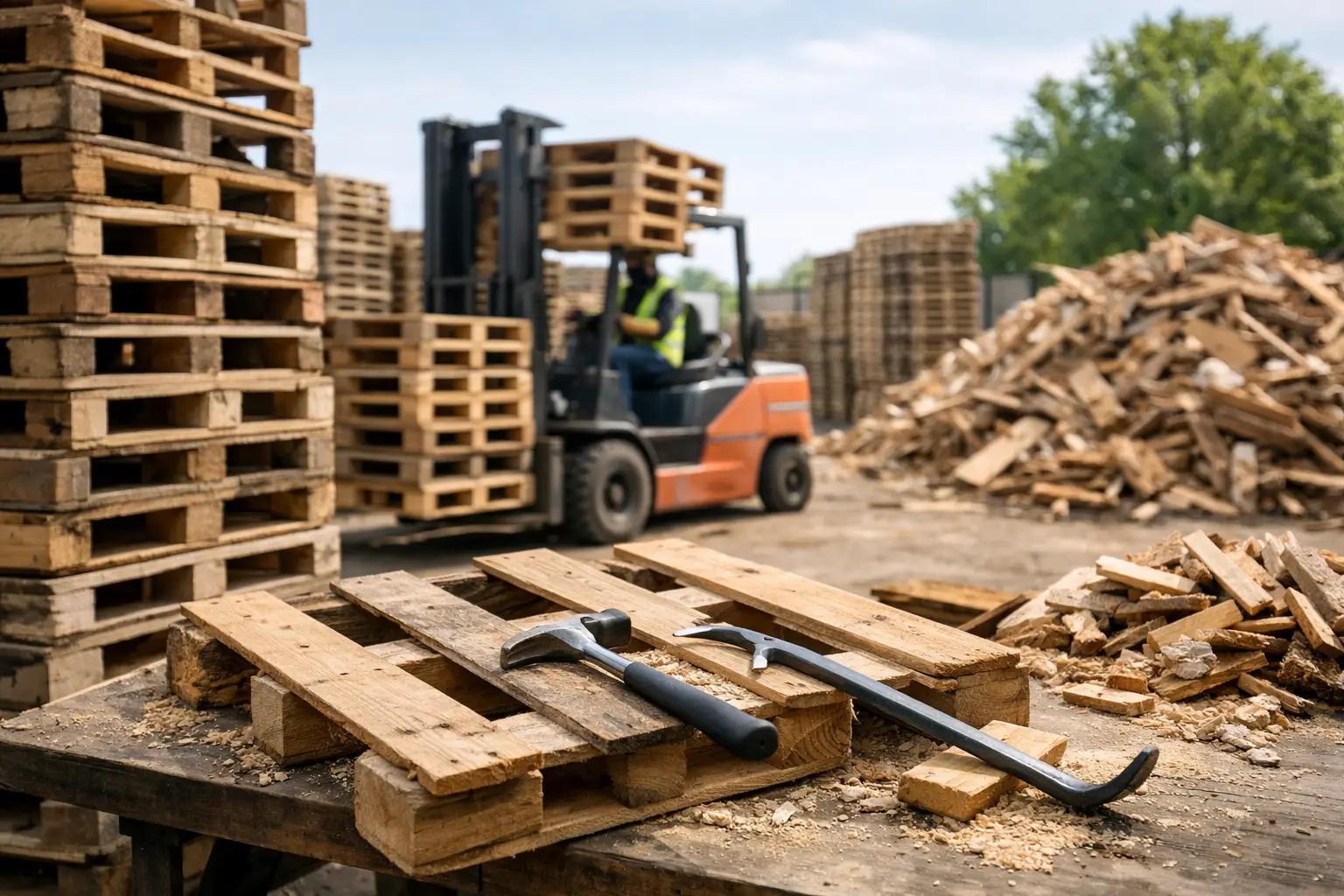
In winter, pallets lose value mostly through moisture rather than use. A wet pallet is heavier, goes mouldy more easily and is valued lower at buy-back. Here is how to protect them from November to March and what to check before loading them.
Updated: 6 November 2026 · G-PAL (Dzhipal Ltd), Plovdiv
Why moisture is the main problem
A dry EPAL euro pallet measuring 1200×800 weighs around 25 kg. Left out in rain or snow, the timber absorbs water and the pallet gains several kilograms. Across a full truck, this shows in the total weight of the consignment. Wet wood darkens, turns mouldy in places and splits more easily when handled with forklift tines. That is why a light grade pallet left outdoors over winter often ends up dark grade, and its price drops.
How to store pallets in winter
- Under cover or in a warehouse. A roof over the stack matters most. If there is no shelter, cover the top pallet with plastic sheeting but leave the sides open for ventilation.
- Not directly on the ground. The bottom pallet should sit on concrete or on bearers, not in mud and snow. Otherwise the bottom boards and blocks are the first to soak up water.
- Sorted by type. Keep EPAL, UIC and skids in separate stacks. That way, when you sell or we buy them back, the inspection is quick and the price is better.
- Stable stacks. Pallets should be stacked squarely on top of one another on a level base. A leaning stack is dangerous in icy and windy conditions.
- Damaged pallets kept separately. Broken EPAL pallets should not be thrown away. If kept dry, they can often be repaired under EPAL licence BG-308.
Export pallets and ISPM 15
For shipments outside the EU, wooden packaging must be treated to the ISPM 15 standard. In heat treatment (HT marking), the core of the wood is held at 56 °C for at least 30 minutes. The marking remains valid, but a mouldy or visibly soiled pallet may be rejected at inspection. That is why export pallets should be kept dry in winter too.
Pallet prices
Prices are “from”: new EPAL from €16.20, used EPAL light grade from €11.00, medium grade from €10.00, dark grade from €7.00, euro skid 120×80 from €4.20, pallet collar from €10.20. The exact price for the day depends on the type, grade and quantity. See euro pallet prices today.
Selling pallets you won’t need until spring?
Winter is a good time to clear your yard. We buy all types of pallets and skids, come to your site, pay on the spot and load with our own truck. Dry, neatly stacked pallets are valued higher. More about the service: euro pallet and skid buy-back.
Frequently asked questions
Can pallets be kept outdoors in winter?
Yes, as long as they are covered on top and not standing directly on the ground. Without a roof, the timber absorbs water, and the pallets darken and lose value.
How much does a wet euro pallet weigh?
A dry EPAL weighs about 25 kg. A wet one is several kilograms heavier, depending on how much water the timber has absorbed.
Do you buy wet pallets?
Yes, we buy all types. Wet and mouldy pallets are valued lower than dry ones.
Is the ISPM 15 marking still valid after winter?
Yes, the marking does not expire. However, a mouldy or soiled pallet may not be accepted for export.
See also: used pallets, euro pallet repair, pallet dimensions, weight and load capacity, euro pallets from G-PAL.
📞 Call: +359 877 166 555 · Viber · WhatsApp
About the author
depal
Pavel Damyanov is the manager of DZHIPAL Ltd (G-PAL) - a manufacturer and supplier of euro pallets, wooden skids and pallet collars based in Plovdiv, 270 Vasil Levski Blvd. The company is a licensed EPAL pallet repair operator (licence No. BG-308), buys back pallets and skids on site and delivers nationwide with its own transport.
Published on 6 November 2026
Need today's price? Tell us the pallet type, quantity and city and we will reply with today's price.
Request a price
