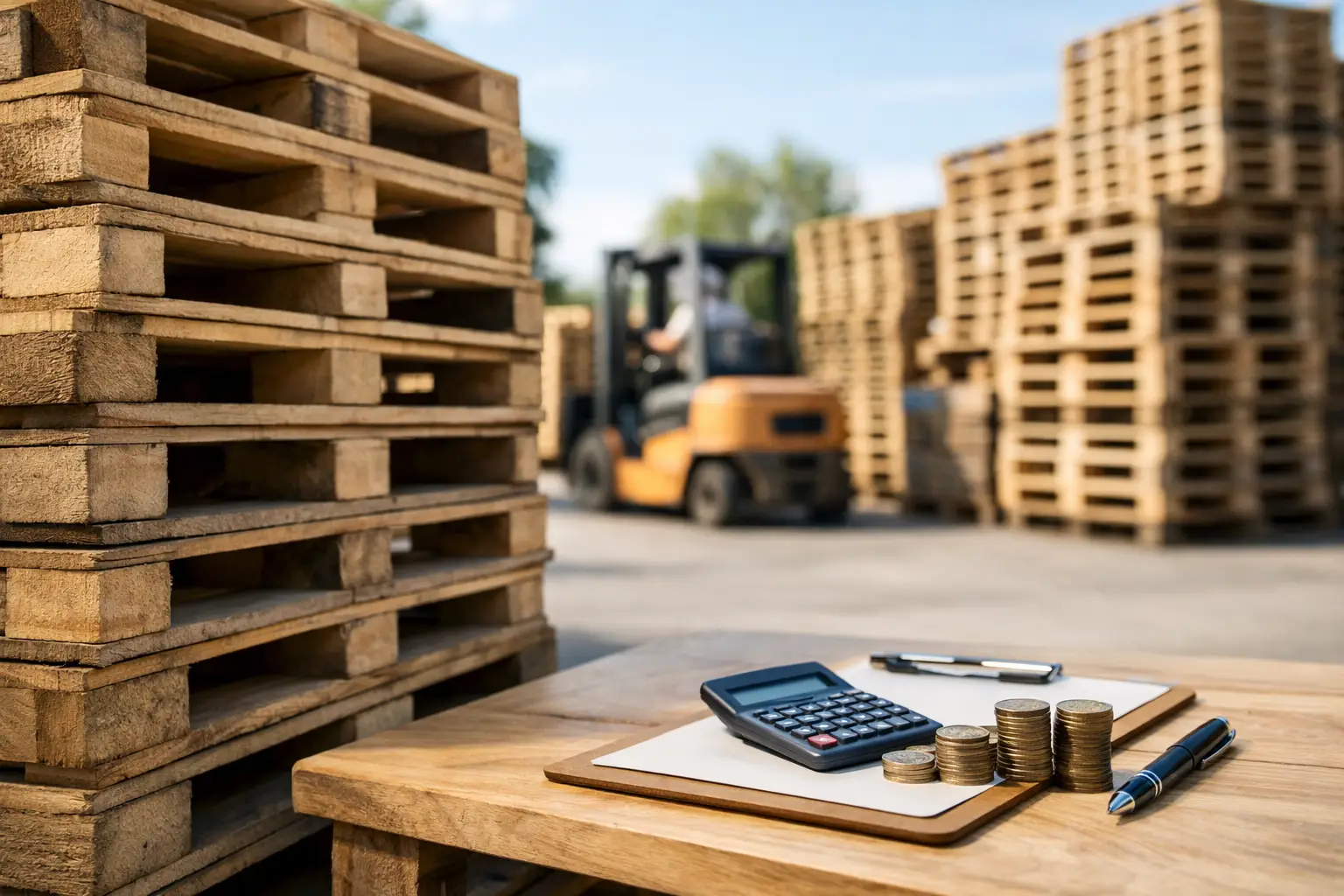
Used EPAL: dark grade from €7.00, medium grade from €10.00, light grade from €11.00 – order on +359 877 166 555 or via Viber/WhatsApp.
The price of a used pallet depends on three things: the type (EPAL, UIC or skid), the condition (light grade, less worn, or dark grade) and the quantity. Light-grade EPAL pallets cost more than dark-grade ones. G-PAL gives you the price for the day over the phone, because the market moves every day.
Updated: 12 October 2026 · G-PAL (Dzhipal Ltd), Plovdiv
When you are looking into used pallet prices, the biggest mistake is to compare on the figure alone. Two pallets can look much the same yet have a very different real value for your warehouse, your transport and your customer. For business deliveries, price matters – but what exactly you get for it matters even more.
For buyers, logistics coordinators and warehouse managers, this is no minor expense. With regular orders, even a small difference in unit cost feeds straight through to the budget. That is why it pays to look beyond the quote itself, at condition, standard, availability and the option of fast delivery.
What determines the price of used pallets
The price of used pallets comes down to a few clear factors. First is the type of pallet. EPAL euro pallets and UIC pallets hold a different value from ordinary wooden pallets, because they have standardised dimensions, construction and use in international logistics.
Next comes condition. One used pallet may be entirely fit for reuse but show cosmetic signs of wear. Another may have been repaired, have replaced components or show signs of heavier loading. Both are used products, but naturally the price will not be the same.
Quantity and how regularly you order also count. A one-off purchase of a small number of pallets is rarely priced the same way as a steady supply to a warehouse, production site or logistics centre. Larger volumes give more scope to optimise the price, especially when transport is organised efficiently.
Location plays a part too. If you operate in Plovdiv and Plovdiv Province, being close to the supplier often cuts logistics costs and shortens response times. That matters not only for the final price but for keeping your operations running without interruption.
What a good quote includes besides a low price
A low price on its own is not a strong offer if it is followed by complaints, shortfalls or delays. With used pallets, a good quote should rest on a few practical conditions.
First, the pallets should be sorted. That means no mixing of different grades, unsuitable sizes or components that compromise load capacity. For a business customer this is critical, because unpredictable quality causes problems in the warehouse and along the supply chain.
Second, the stock must actually be available. In practice, many companies waste time chasing suppliers who advertise a good price but cannot supply the volume needed at the right moment. When you have a busy dispatch schedule, a quick response is worth more than a token discount.
Third, you need to know whether the price is for a specific pallet grade, a sorted batch or mixed condition. This is often left unclear, and that is exactly where the difference lies between a good buy and a problem delivery.
When a lower used pallet price ends up costing more
There are cases where the lowest used pallet price is not the best choice. This often happens with pallets that are out of shape, have cracked boards, carry uneven loads or have structural compromises that are not visible at a glance.
If the pallet goes into a racking system, is handled by forklifts or carries heavier goods, even a small defect can lead to damaged stock, delays or an incident on site. The saving per pallet is then lost many times over in operating costs.
The same goes for exports. If you need pallets to a particular standard, for a specific customer or for international logistics, you have to think not just about price but about compliance. For some applications, an unsuitable used pallet is simply not an option.
How to judge whether a quote is genuinely good value
The best approach is to look at the total value of the delivery, not just the unit price. Ask what grade the pallets are, what condition they are in, whether they have been sorted and whether there is consistent availability for repeat orders.
It also matters whether the supplier works in pallet buy-back as well. That is usually a good sign that they know the market, how stock moves and the real value of different pallet types. When a company handles both inbound and outbound flows, its assessment is more practical and closer to what businesses actually need.
Look at transport, too. Sometimes an attractive pallet price loses its appeal once delivery is added, especially for smaller quantities or more distant sites. When logistics is part of the service, planning is easier and the final cost is more predictable.
Used or new pallets – when each is the right choice
Not every business needs new pallets. For internal warehouse movements, short transport cycles or routine loading and unloading, used pallets are often a perfectly sensible choice. They strike a good balance between cost and function, provided they are chosen properly.
New pallets are better suited when you need an immaculate appearance, have a strict customer standard or work in an environment that demands specific certification and a long service life. The initial outlay is higher, but it brings predictability.
So the choice is not a matter of a universal rule but of the specific application. For many companies the most practical option is a mixed model – new pallets for certain lines and used ones for lower-risk day-to-day operations.
What to expect with larger quantities
With wholesale orders, the price is almost always looked at differently. Beyond the value of the pallet itself, the supply rhythm, pallet types, loading schedule and scope for reverse logistics are all taken into account.
This is especially important for manufacturers, warehousing sites and haulage companies with a steady turnover. If you need set quantities every week, a predictable partner is worth far more than one-off purchases at a momentarily low price.
With large volumes, good practice is to agree the acceptable variation in condition, the delivery method and the option of regularly buying back your freed-up pallets. That puts the price in a real commercial context rather than looking at it in isolation.
Why a local supplier is often the better choice
With pallets, time is a factor. When you are short of pallets for dispatch, or need to clear used pallets out of the warehouse quickly, having the supplier nearby has direct value. This is especially true for companies in Plovdiv and the surrounding region, where a fast response is often decisive.
A local partner understands how business works in the area, the seasonal peaks and the usual requirements of manufacturing and logistics companies. That means more predictable deliveries and easier communication. No time is lost on back-and-forth that would otherwise slow the whole process down.
That is why many companies prefer to work with a supplier who can sell, buy back and organise transport all at once. GPAL is an example of this kind of partner – focused on practical solutions, real availability and service geared to the everyday needs of business.
How to send a useful price enquiry
If you want an accurate, useful quote, it is not enough to ask only about used pallet prices. State what type of pallets you need, in what quantity, for what application, and whether you require a specific condition or standard.
If the pallets are for export, racking storage or heavy loads, say so from the outset. That way you get a quote that matches how they will actually be used, rather than an indicative price that changes later.
If you also have pallets to sell, it helps to specify their type, number and condition. In many cases, buying and buy-back can be structured more favourably when they are looked at together.
The market logic is simple, but the choice must be precise
The price of used pallets is not a fixed figure but the result of quality, standard, quantity and logistics. That is exactly why the best decisions come not from the loudest offer but from an accurate judgement of what your operation needs today and what will save you problems tomorrow.
When you are sourcing pallets for real business use, think in terms of reliability, availability and predictability. A good price makes sense when it comes with quality that works and a partner you can rely on for the next order too.
Questions about used pallet prices
How much does a used euro pallet cost today?
Light-grade EPAL is from €11.00, medium grade from €10.00 and dark grade from €7.00 per pallet. Today’s exact price depends on grade and quantity – we will give it to you straight away on +359 877 166 555.
Why are light-grade pallets more expensive?
They are less worn, cleaner and good for more trips. Dark-grade pallets are cheaper and do the job in warehouses and construction.
Is it cheaper for large quantities?
Yes, the price depends on quantity. Tell us how many you need to get an exact price.
Do you buy back used pallets?
Yes, all types, and we pay on the spot. See pallet buy-back below.
See used pallets, light-grade EPAL, dark-grade EPAL, euro pallet prices, pallet buy-back.
📞 Call: +359 877 166 555 · Viber · WhatsApp
See also: new euro pallets, euro skids.
Updated: 9 November 2026
Need today's price? Tell us the pallet type, quantity and city and we will reply with today's price.
Request a price
